Scavenger Hunt Clues for Kids: Rhyming Clues by Room
September 27, 2026
Good scavenger hunt clues for kids are short rhymes that point to one obvious hiding place, like the fridge, the bathtub or the mailbox, with each clue hidden at the answer to the one before. Plan eight to twelve stops for a party. Write the clues in hiding-place order, then hide them in reverse, and put the treasure at the last stop. Below are rhyming clues sorted by room (kitchen, living room, bedroom, bathroom, outdoors), easier versions for little ones, and exactly how to run a treasure hunt at a party without it turning into a stampede.
How a clue trail works
You hand the kids the first clue. It sends them to a hiding place, where they find the second clue, which sends them to the next, and so on until the last clue leads to the treasure. Scavenger hunt, treasure hunt or clue hunt: it’s the same game under three names.
The trick every first-timer misses: hide them backwards. Lay your clues out in order on the kitchen table, then start hiding from the end. The treasure goes in its spot first, then the clue that points to it, and so on until you’re holding clue one. That way you can’t accidentally hide a clue where it will never be found.
Kitchen clues
The fridge
I’m cold inside but I’m not sad,
I keep the milk from going bad.
The freezer
Colder still, my friend, look higher,
where ice cream hides from summer fire.
The fruit bowl
Apples, bananas, round and bright,
your next clue’s hiding here, in plain sight.
The cookie jar
You’d sneak a treat here if you could,
but look for paper; that’d be good!
The pots and pans cupboard
We bang, we clang, we cook the soup,
look where we sit in a noisy group.
The kitchen table
Four legs, no feet, and plates on top,
look underneath before you stop.
Living room clues
The couch cushions
Where coins and crumbs and lost toys hide,
lift me up and look inside.
The bookshelf
I hold a hundred stories tight,
look on my shelves from left to right.
The TV remote
I’ve got buttons but I’m not a coat,
I change the show. I’m the ________!
(Let little ones shout the missing word. It’s half the fun.)
Under the rug
Walk on me, but don’t just stand,
flip my corner with your hand.
A houseplant
I’m green, I grow, I love the sun,
check my pot, then off you run.
Bedroom clues
Under the pillow
Where the tooth fairy likes to go,
your next clue is waiting, soft and low.
The sock drawer
I’m full of pairs but some are gone,
look in the place where feet go on.
The closet
Open my doors and you will see
all your clothes hanging here with me.
The toy box
Dolls and dinos, blocks and cars,
look in me where your playthings are.
Under the bed
Dust bunnies live here, dark and deep,
below the place where you go to sleep.
Bathroom clues
The bathtub
Splish and splash, rubber duck,
look in here and try your luck.
The towel rack
I get wetter the more I dry,
check my fold before you walk by.
The toothbrush cup
Twice a day you use me well,
brush, then look where the brushes dwell.
Outdoor and backyard clues
The mailbox
Letters come here every day,
open my door, then on your way.
The trampoline
Up you go and down you fall,
check beneath the bounciest of all.
A tree
I’m tall, I’m brown, I wave my leaves,
look where my trunk meets the breeze.
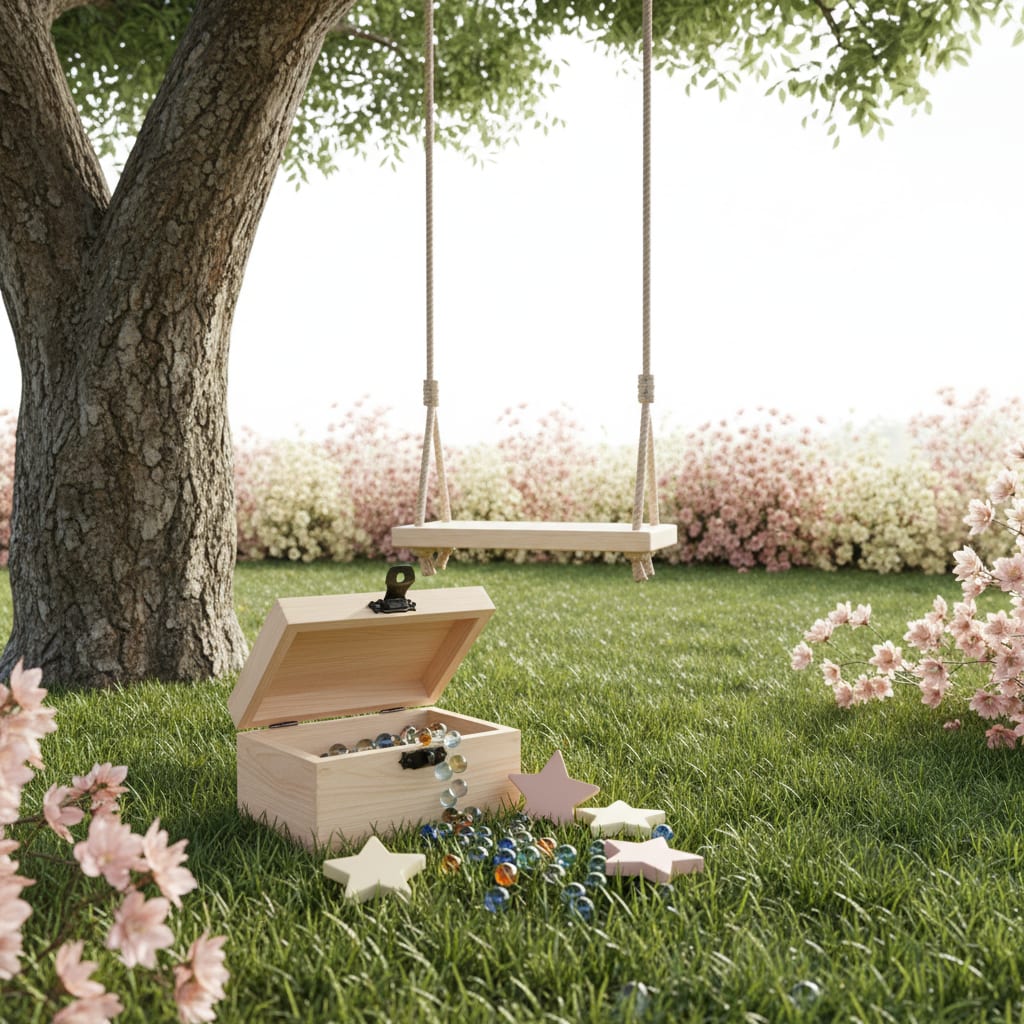
The swing
Push me high and I’ll come back,
look underneath my wooden track.
The garden hose
I’m long and green and like to spray,
uncurl me and you’re on your way.
The car
Four wheels to take you near and far,
your next clue’s waiting by the car.
The front door mat
Wipe your feet and step inside,
but look under me where clues hide.
Easier clues for ages 3 to 5
Little ones can’t read rhymes yet, so try picture clues: draw or cut out a simple picture of the hiding place (a fridge, a bathtub, a teddy bear) and tape it to a card. A grown-up reads nothing; the child just runs to what they see. Keep the trail to five or six stops and give every child a turn at being the one who finds the clue.
Harder clues for ages 9 to 12
Big kids find rhymes too easy. Swap in riddles, where the answer is the hiding place and never named in the clue:
- I have four legs but cannot walk. (The table.)
- I have keys but open no locks. (The piano, if you have one.)
- I have hands but cannot clap. (The clock.)
Our riddles for kids page has plenty more that work as hiding places. Or send them outside with a camera and a list instead; a photo scavenger hunt is the older-kid version that needs no hiding at all.
Running a treasure hunt at a party
- One trail per team, not one for the whole party. Ten children chasing one clue means the fastest reader does everything. Split into teams of three or four, each with its own color of paper and its own trail.
- Make each team’s trail visit the same places in a different order. Everyone ends at the same treasure, nobody piles into the bathroom together.
- Eight to twelve stops is the sweet spot for a party. Fewer feels over too soon, and more loses the little ones.
- Put a grown-up at the tricky stops, like the car or anything near the street.
- Skip the oven, the dishwasher, the dryer and anywhere with cords. Kids will open whatever the clue points at.
- Treasure that can be shared: a box of party favors, one per child, or the cake itself if you’re brave.
- Have the next game ready. A hunt ends in a rush of energy, and a quick round from our Minute to Win It games for kids uses it up before cake.
- Take a photo of each hiding spot as you go. When a clue goes missing (one always does), you’ll know where it was.
For a Halloween version, give each clue a spooky twist and end at a candy cauldron. It fits right between the games in our Halloween party games for kids roundup.
FAQ
How many clues should a kids’ scavenger hunt have?
Eight to twelve for a party, five or six for preschoolers. A hunt should take 15 to 25 minutes, long enough to feel like an adventure and short enough that nobody gives up.
How do you make scavenger hunt clues for kids?
Pick your hiding places first, write one short rhyme for each that describes the place without naming it, then hide them in reverse order so each clue sits at the answer to the one before.
What is the difference between a scavenger hunt and a treasure hunt?
A scavenger hunt is usually a list of things to find; a treasure hunt follows a trail of clues to one prize. At a kids’ party the words get used for the same game, and these clues work for both.
Where should you hide the treasure?
Somewhere big enough for the whole group to gather, like under the kitchen table, in the garden shed or in the bathtub. The last clue should be the easiest one, so everyone arrives together.
Hide them backwards, send them off in teams, and have the treasure ready, friend. It’s the best twenty minutes of any party!