Room Sharing Bedtime: Big Kid and Newborn in One Room
August 3, 2026
When a toddler or preschooler shares a room with a new baby, the fix is almost always staggered bedtimes plus steady sound: put the older child down first in the dark, keep the newborn’s evening feeds and settling somewhere else in the house, and bring the baby in once the big kid is deeply asleep. Add a sound machine running all night and most of the “they’ll wake each other constantly” fear simply doesn’t happen. Older children sleep through newborn crying far better than parents expect — it’s the parents’ anxiety about the noise that usually wakes the house. Here’s how to set the room, the evening and the first two weeks up so both of them sleep.
Start by celebrating the room, not just the baby
At Just Motherhood we make a fuss of the transitions, and this one earns it. The child being asked to share is losing something real — the room was theirs — so mark the change as a promotion rather than a loss.
- Move the big kid first, weeks ahead. If a bed or a corner is changing, do it four to six weeks before the baby arrives so the new setup is old news by the time the crib is occupied.
- Give them the choosing power. Which wall the bed goes on, which nightlight, the new bedding. One genuine decision does more than a dozen reassurances.
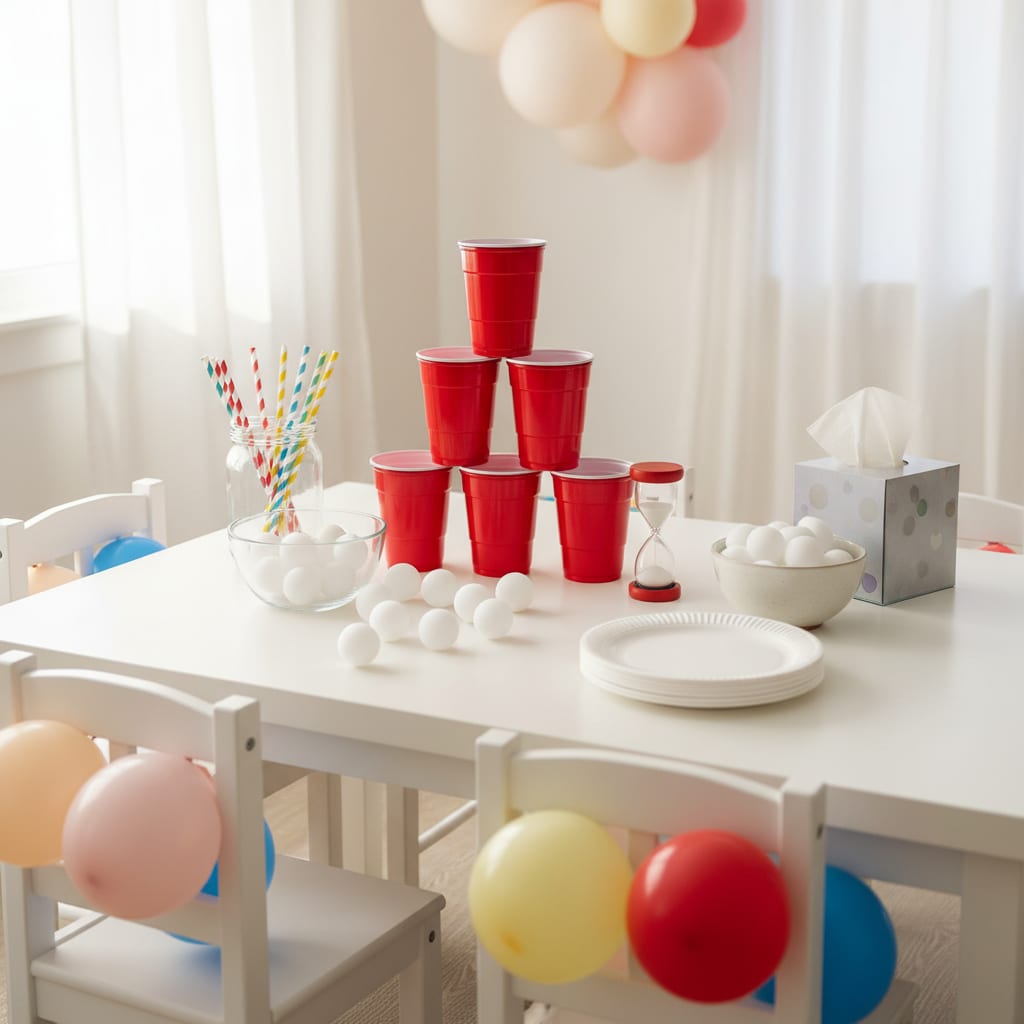
- Throw a tiny “big sibling” moment. A cupcake, a balloon on the bedroom door, a wrapped gift that lives in their half of the room — a torch, a special pillow, a book about being the oldest.
- Photograph the room the way you’d photograph a party setup. It’s a milestone; it deserves the picture.
The wider version of this — how to protect a bedtime through any big change — is in our guide to bedtime after a new sibling, school or a move.
Set the room up in zones
You’re not decorating a nursery, you’re building two sleep zones that happen to share four walls.
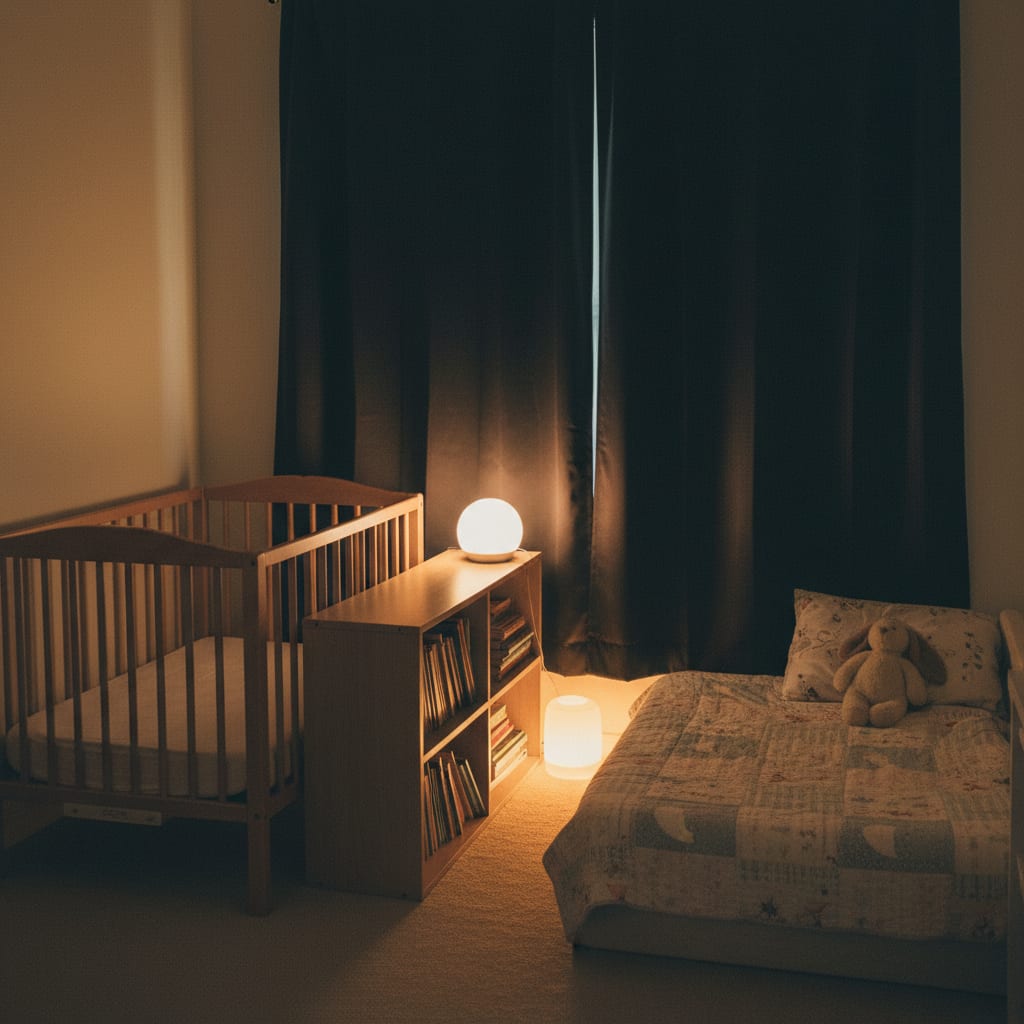
- Crib away from the door and away from the big kid’s bed. Diagonal corners if the room allows it. Every foot of separation helps.
- A divider. A bookshelf turned side-on, a curtain on a tension rod, or a folding screen. Visual separation matters more than acoustic separation — the toddler stops watching the baby, the baby stops watching the toddler in the morning.
- Blackout on the window, and one nightlight, warm and dim, on the older child’s side. Newborns don’t need it; four-year-olds often do.
- A safe-sleep crib with nothing in it but a fitted sheet — no bumpers, pillows or toys — even when the sibling’s bed two feet away is full of stuffed animals. Explaining that difference to the big kid is worth doing once, plainly: “Babies’ beds stay empty until they’re bigger.”
- Everything you need at night lives outside the room. Diapers, wipes, spare sleepsuits, the feeding chair. Nothing that rustles, clicks or switches on belongs in the shared room.
Stagger the bedtimes
This is the single change that fixes most shared-room problems.
7:00 p.m. — the big kid goes down in the dark room, with their normal routine, unhurried. This is their time, and protecting it protects everything else.
7:00 to 9:00 p.m. — the newborn stays out. Newborn evenings are chaotic by design: cluster feeding, a fussy stretch, three attempts at settling. Do all of that in the living room or your bedroom so none of it lands on the sleeping four-year-old. If the shape of a newborn’s evening is still a mystery, Betteroo’s walk-through of what a newborn’s evening routine looks like is a useful map of the first weeks.
9:00 p.m. — the baby comes in, already fed and asleep, transferred to the crib with the lights off. By then the older child is in their deepest sleep of the night and genuinely hard to wake.
If your older child fights bedtime while the baby is being fed downstairs, swap parents rather than skipping the routine. Same books, same songs, different grown-up.
Sound is your best tool
Steady noise raises the floor so individual cries don’t spike above it. Run a sound machine at a moderate, constant volume on the far side of the room — between the two sleepers if you can — from bedtime until morning, every single night. Consistency is what trains the room; switching it on only during a crying jag teaches the older child that noise means something is happening.
A mechanical unit like the Yogasleep Dohm suits shared rooms particularly well because there’s no loop to notice and no light on the front. Betteroo compares the sound machine options for a shared room if you want the full rundown before you buy.
Keep it well away from the crib rail and no louder than a shower running. Loud enough to blur a cry, quiet enough to talk over.
The 3 a.m. plan
Decide this before you need it, because nobody makes good decisions at 3 a.m.
- Take the baby out to feed, at least for the first month. It’s slower, and it keeps night waking from becoming a two-child event.
- Give the newborn 60 seconds before you go in. Newborns are noisy sleepers — grunting, squeaking and shifting are not waking.
- Don’t turn a light on. A dim hallway light with the door ajar is enough for a diaper change on the landing.
- If the big kid does wake, keep it boring: a hand on the back, no talking, no explaining. Curiosity is the enemy at 3 a.m.
- Change one thing at a time, and only after three nights of the same problem.
Older children in a shared room sometimes start appearing at your bedside instead of calling out, which is worth reading correctly rather than treating as a sleep problem — our guide to nightmares versus night terrors covers what’s actually happening and what to do at the door.
What the first two weeks look like
Week one is usually easier than you feared and week two is usually harder — the novelty wears off and everyone is tired. Both are normal.
A realistic sequence: two or three broken nights while the older child adjusts to a crib in the room, then a settled stretch, then a wobble around the time the newborn’s sleep starts consolidating and the evening fussing shifts later. Around three to four months the baby’s sleep changes shape again in ways that can look like everything falling apart — the survival plan we wrote for that phase is in our 4-month sleep regression guide.
If you want the newborn’s day mapped out rather than guessed at, a plan built around your baby’s actual wake windows takes a couple of minutes to generate and makes the staggered-bedtime version of your evening much easier to hold.
FAQ
Can a toddler and a newborn share a room?
Yes, and most families who try it are surprised how well it goes. Stagger the bedtimes, use a sound machine every night, and keep the crib bare and away from the door and the older child’s bed.
Will the baby wake the toddler up at night?
Occasionally, but far less than parents expect — older children sleep deeply through the early part of the night and habituate to newborn noise within a week or two. Steady white noise takes care of most of what’s left.
What age can siblings start sharing a room?
There’s no set age. The practical answer is once the newborn is out of the every-two-hours phase, which for many families is somewhere around three to six months — until then, a bassinet in the parents’ room is usually calmer for everyone.
Should you sleep train a baby who shares a room with a sibling?
You can, but do it while the older child sleeps elsewhere for a few nights — a grandparent’s house, a mattress in your room — so the first noisy nights don’t cost you both children’s sleep.
How do you handle different bedtimes in one room?
Older child first in the dark, newborn settled elsewhere and moved in later, and a rule that nobody comes into the room for anything non-essential once the door is shut. That’s the whole system.
Two kids, one room, one very tired mama — but it does settle, usually faster than the internet promises. Set the zones, stagger the bedtimes, and go make a fuss of your brand-new big sibling!