Kwanzaa With Kids: Seven Evenings, a Karamu and Bedtime
November 3, 2026
Kwanzaa runs from Saturday, December 26, 2026 to Friday, January 1, 2027, and little ones can be part of every evening of it. Each night one principle gets its moment and one more candle is lit, so the candle-lighting makes a natural start to the bedtime wind-down. The Karamu feast on Thursday, December 31 is the one late night. Make it your big night, keep the other six cozy, and let the quiet first day of the new year do the recovering. Here’s the week, friend.
What happens each evening
The Official Kwanzaa Website, kept by the Organization Us (the holiday’s founding organization), names the Seven Principles, the Nguzo Saba: “Umoja (Unity), Kujichagulia (Self-Determination), Ujima (Collective Work and Responsibility), Ujamaa (Cooperative Economics), Nia (Purpose), Kuumba (Creativity) and Imani (Faith).” Each day belongs to one of them.
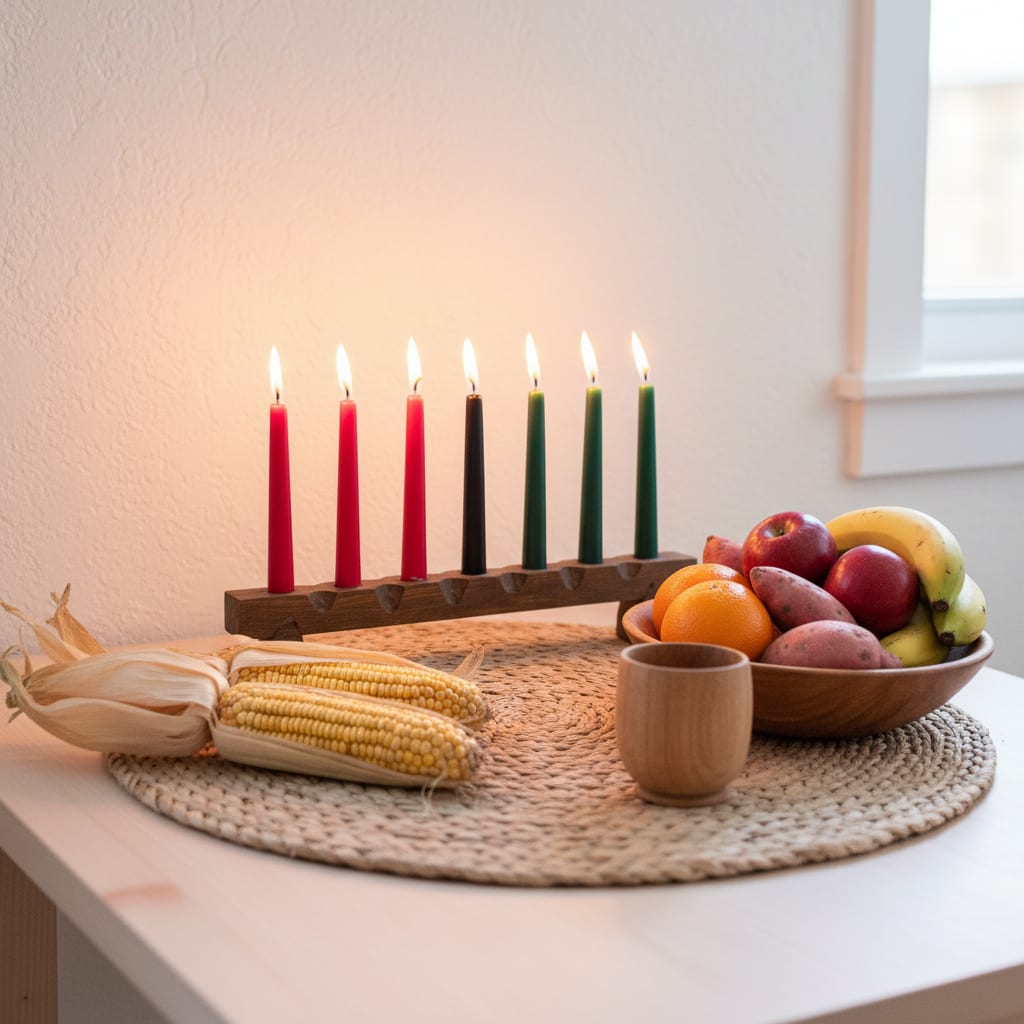
Its celebration page describes the kinara (candle holder) on the mkeka (mat), holding the seven candles: “one black candle, three red and three green candles.” The black candle stands for Umoja and goes in the center, with the red to its left and the green to its right. “The black candle is lit first on the first day of the celebration. And the remaining candles are lit afterwards from left to right on the following days.”
Per the greetings page, the daily question is “Habari gani?” and “the answer is each of the principles for each of the days of Kwanzaa.” A toddler who can shout “Umoja!” has a real job.
The 2026 evenings at a glance
| Evening | Principle | Planning note |
|---|---|---|
| Sat, Dec 26 | Umoja (Unity) | First lighting |
| Sun, Dec 27 | Kujichagulia (Self-Determination) | Weekend evening |
| Mon, Dec 28 | Ujima (Collective Work and Responsibility) | Winter-break weeknight |
| Tue, Dec 29 | Ujamaa (Cooperative Economics) | Short and cozy |
| Wed, Dec 30 | Nia (Purpose) | Early bedtime before the feast |
| Thu, Dec 31 | Kuumba (Creativity) | The Karamu, and New Year’s Eve |
| Fri, Jan 1 | Imani (Faith) | Last day; a day of reflection |
The Indianapolis Public Library’s Kwanzaa page for kids sums up the shape of the week: “Observed from December 26th to January 1st, it includes a feast on December 31st called Karamu.”
Most schools are out all week, which is exactly when bedtime quietly drifts an hour later.
Make the candle-lighting the start of bedtime
Light the kinara at the same time every evening, after dinner and before bath:
- Gather at the table with the house lights turned down a little.
- “Habari gani?” A grown-up asks, and the kids answer with the day’s principle.
- Light the day’s candle, and let a child say what the principle means. For a 3-year-old, one sentence is plenty: “Umoja means we stick together.”
- One small thing: a song or a short story.
- Straight into the routine. Bath, pajamas, books, bed.
That last step matters. Betteroo’s guide to the wake-up that comes right after an exciting bedtime notes that “a false start is often the tail of a bedtime that was too exciting,” and advises: “Dim the lights 30 to 45 minutes before bed and let the routine wind down, not up.” Candlelight with the lamps off is most of the way there.
Giving kids a real role
The official Kwanzaa for Children page is clear that kids are participants, not spectators: “children must be allowed and encouraged to participate in Kwanzaa as fully as they are able.” They can recite the principles at mealtimes, “light the mishumaa for each day and explain each principle,” make cards and decorations, and help with “a small but meaningful project” for the meals. By age:
- Babies: In a lap at the table, watching the light. That counts!
- Toddlers: Answer “Habari gani?” and help set fruit on the mat.
- Preschoolers: Explain the principle in their own words and light the candle with a grown-up’s hand over theirs.
- School-age kids: Light it themselves with a grown-up beside them, and plan a song or dance to share at the Karamu.
Candles and little hands
The AAP’s holiday decorations safety page says to “remove flammable materials from the area” and to “place the candles where they will not be knocked over, but never leave a burning candle unattended; blow them out before leaving the room or going to bed.” So set the kinara well back from the table edge and away from curtains, tie back long hair before anyone leans in, and blow the candles out before you head upstairs for bath.
The Karamu on December 31
The library page says Kwanzaa celebrations include “singing, dancing, storytelling and African drums,” and the official site lists “feasts (karamu), music, dance, poetry, narratives.” In 2026 the Karamu also lands on New Year’s Eve.
Hosting at home? Our guide to hosting a holiday party with a baby asleep upstairs covers white noise and briefing guests. At a community center or a relative’s house, our plan for taking a baby out to an evening event covers the portable wind-down. Either way:
- Protect the afternoon nap, so a toddler can make it through the drumming and dancing.
- Feed the kids when the food comes out, not after the whole program.
- Babies sleep flat. If your baby nods off in the carrier or stroller, the AAP’s safe sleep guide says to “move them to a firm sleep surface on their back as soon as possible.” Bring a portable crib if you’re staying late.
- Midnight is optional. Little ones can celebrate the Karamu and head to bed before the new year comes in.
January 1: the quiet day
The last day is Imani, and the official Day of Meditation page describes it as a time for “self-reflection” and recommitment. That fits the morning after a late feast: a slow breakfast and a walk.
Keep wake-up close to normal and go for an earlier bedtime that night rather than a long lie-in. Betteroo’s month-by-month look at how baby sleep changes points to a study in Sleep finding that “a consistent nightly bedtime routine led to significant improvements in sleep onset, night wakings, and overall sleep continuity in infants and toddlers.” Seven nights of the same kinara-to-bed rhythm is exactly that, and one late Karamu won’t undo it. If family is staying all week, our tips for bedtime with houseguests keep the routine on track.
 Seven evenings of candlelight, one steady bedtime.
Betteroo builds an age-right nap and bedtime plan from a quick quiz, so you know how late is fine on Karamu night and when to put them down the night after.
Take the free sleep quiz →
Books, gifts and keeping the table its own
The greetings page says gifts “are given mainly to children, but must always include a book and a heritage symbol.” A picture book doubles as that night’s bedtime book. For the littlest ones there’s My First Kwanzaa by Karen Katz; for preschool and early-elementary kids, Seven Spools of Thread: A Kwanzaa Story by Angela Shelf Medearis is a longer read-aloud.
For the kinara, the mat and heritage pieces, think local. The founder’s FAQ separates big companies selling into the holiday from “normal Ujamaa or the cooperative economic practice of artists and vendors to provide Kwanzaa materials.” Buying from Black artists and vendors near you puts the principle into practice.
And if Christmas comes the day before in your house, the celebration page asks families not to “mix the Kwanzaa holiday or its symbols, values and practice with any other culture.” Give the kinara its own table.
FAQ
When is Kwanzaa in 2026?
Kwanzaa runs from Saturday, December 26, 2026 through Friday, January 1, 2027. The Karamu feast is on Thursday, December 31.
Can toddlers light the Kwanzaa candles?
The official site encourages children to light the candles and explain each principle. With a toddler, a grown-up holds the lighter with the child’s hand on theirs while the toddler says the day’s principle. School-age kids can light it themselves with an adult right beside them.
What if we’re guests at someone else’s celebration?
Follow your hosts’ lead. The founder’s FAQ says people who are not of African descent “can and do celebrate it,” and draws a line between joining in and leading: “Audience attendance is one thing; conducting a ritual is another.” Bring the kids, answer “Habari gani?” with everyone, and enjoy the Karamu.
Light the candle, say the word, and get them into pajamas while the glow is still warm. That’s a week your littles will look forward to all year, you guys!